Playing with anagrams
Hexaflexagons are a fun place to play with words. As the paper flexes, the pieces move around and a word can rearrange into something new.
Words in reverse
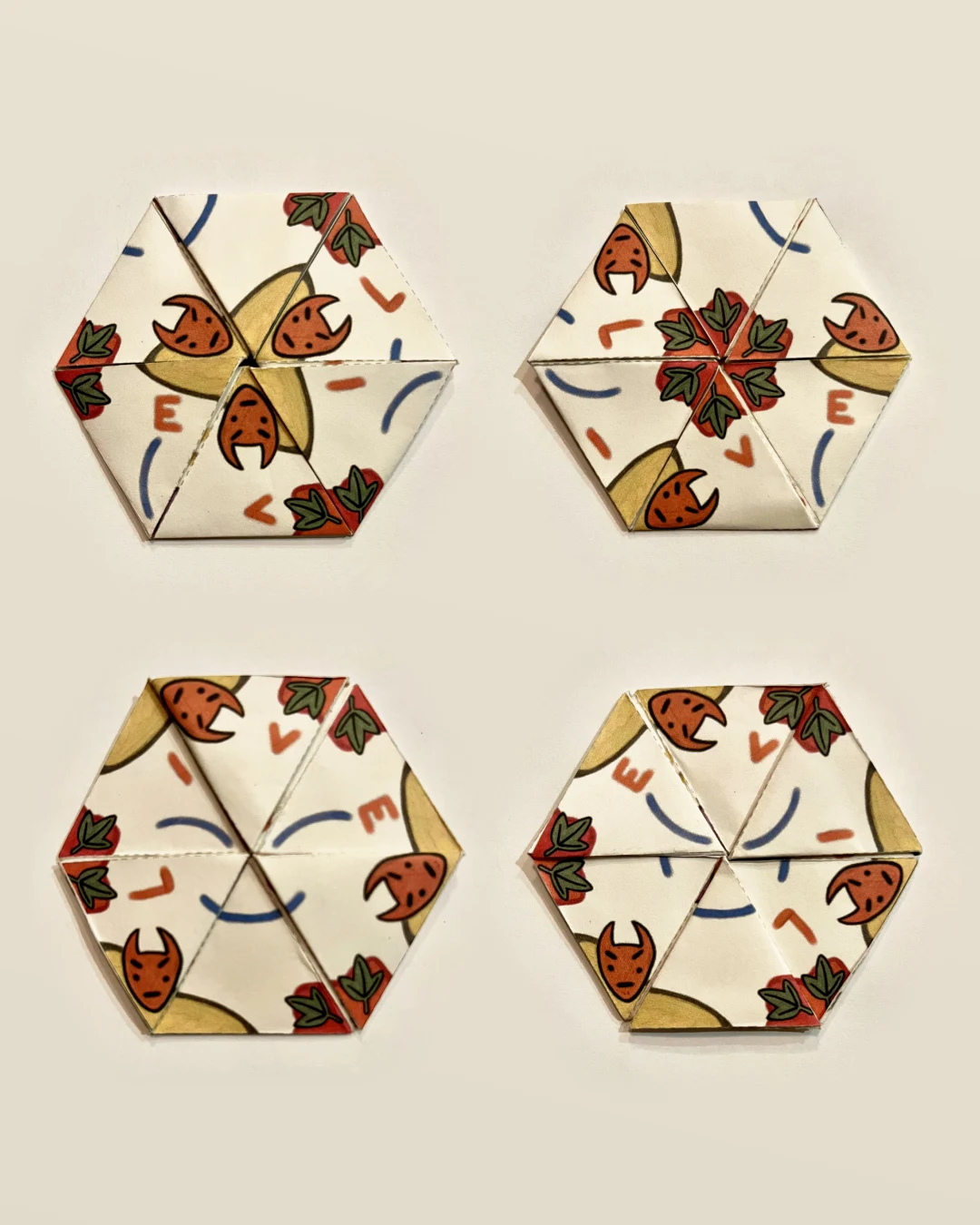
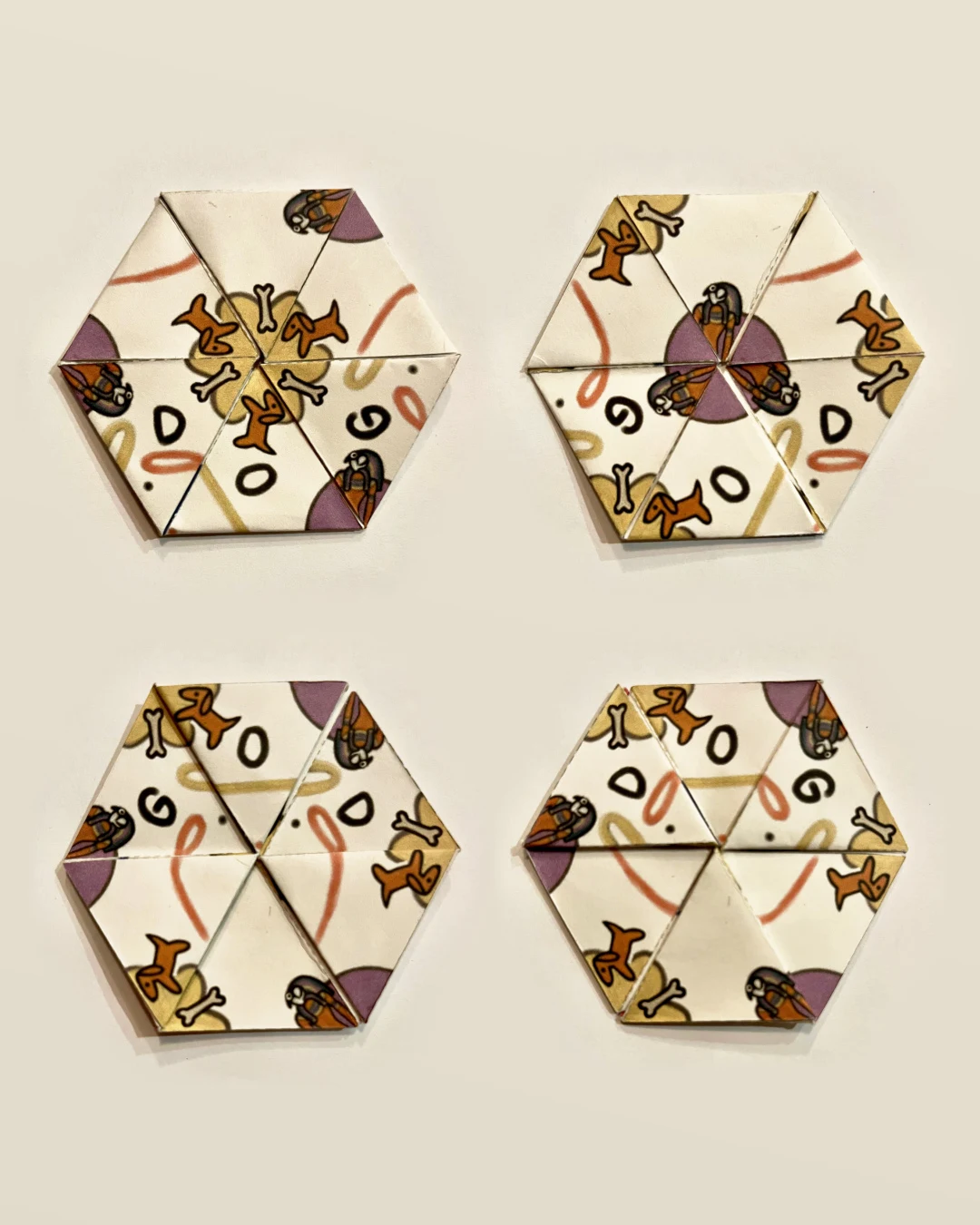
A semordnilap, also known as an anadrome, is a word that spells a different word backwards. Think evil and live or god and dog. Even the word semordnilap means something else backwards.
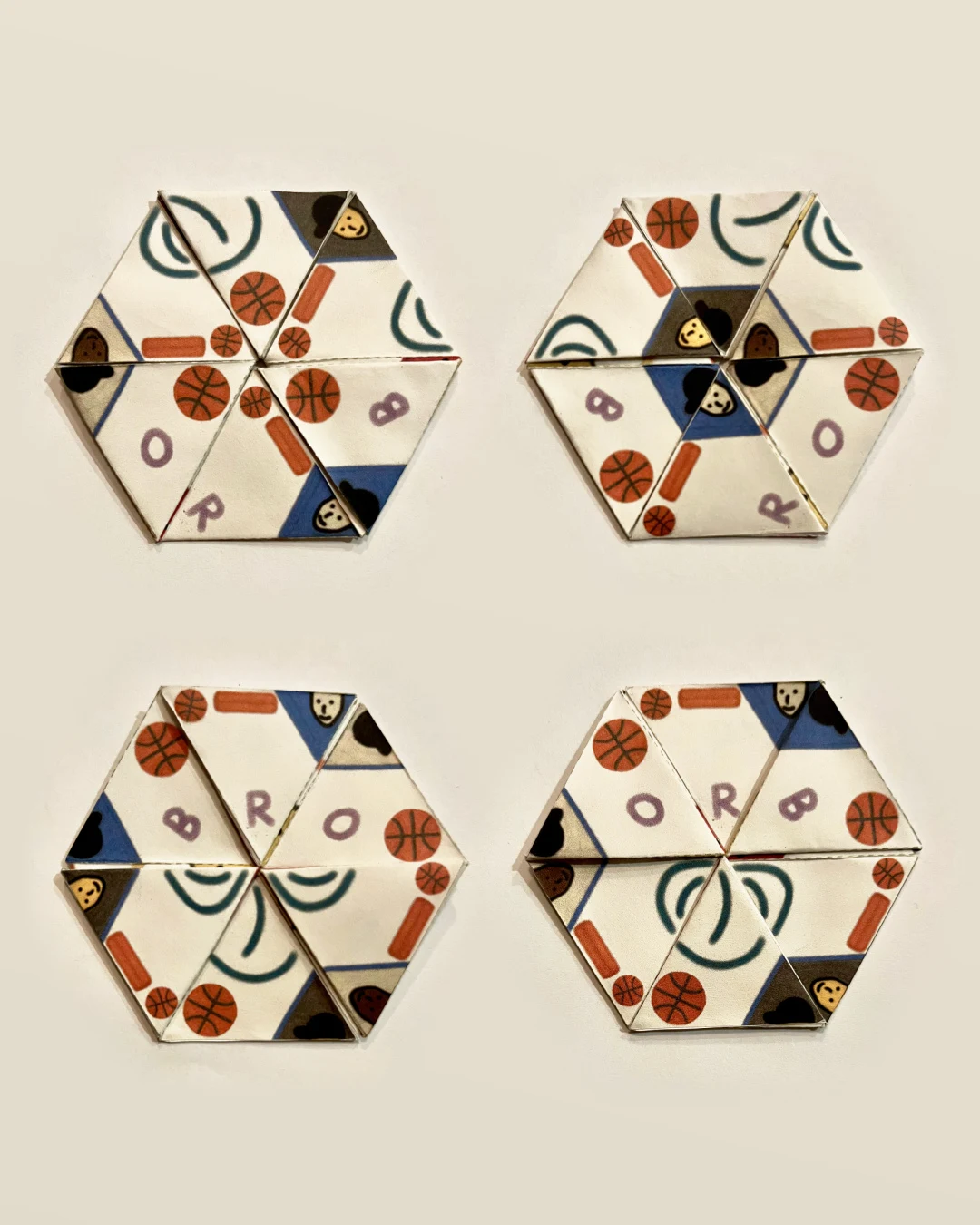
A hexahexaflexagon face with four orientations is a natural stage for a short semordnilap. In two of the four orientations, the same triangle corners meet in the center in reverse order: number them clockwise in one arrangement, and they come back anticlockwise in the other.
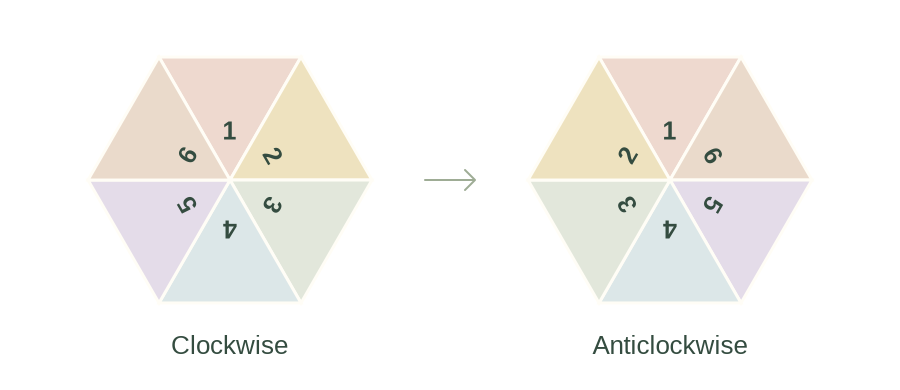
That reversal works perfectly for the letters, but makes illustration a puzzle of its own, as the same pieces have to make a picture both ways.
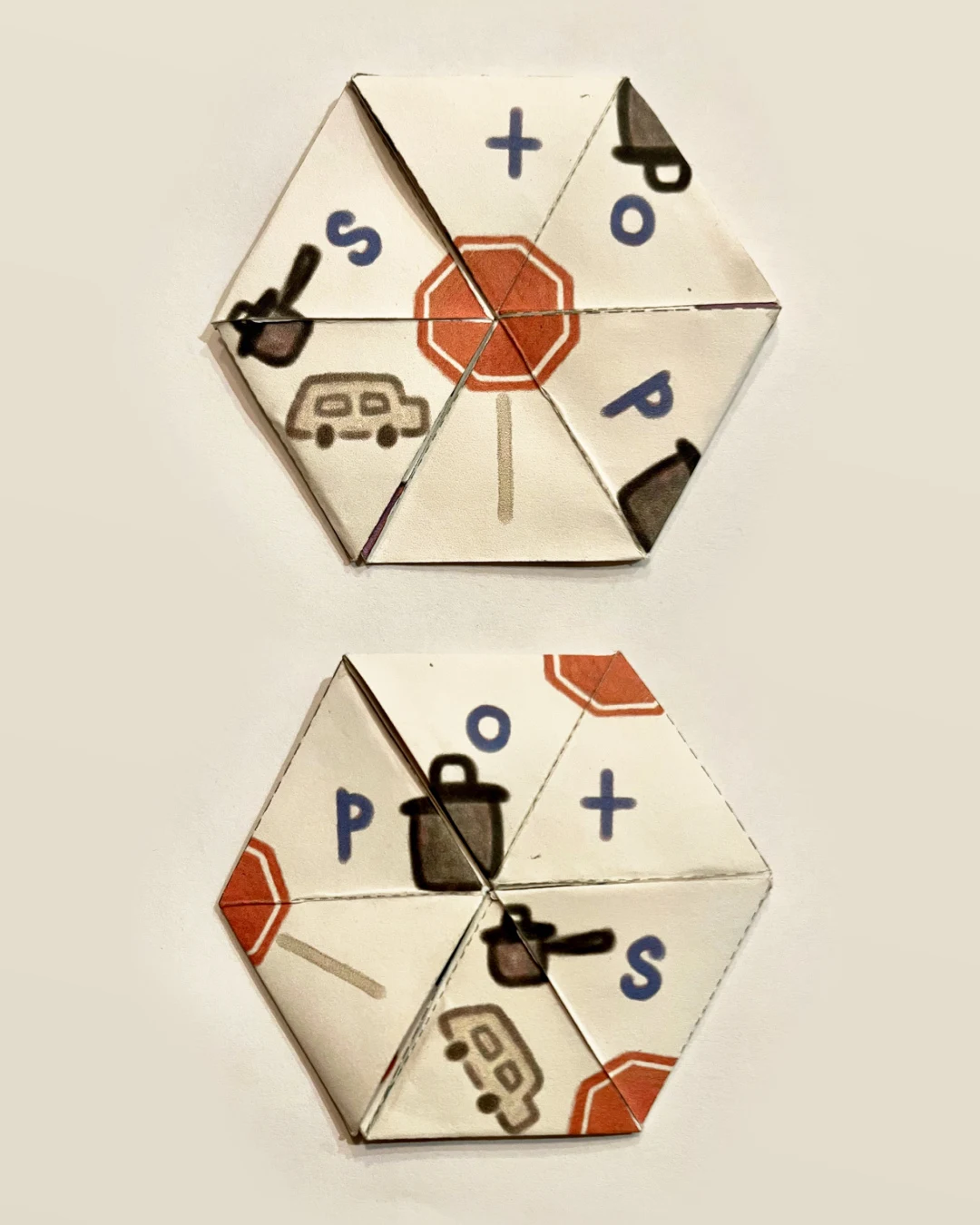
A hexaflexagon face with only two orientations allows for independent illustrations, since each has its own space in the center. But the letters may need special care, because they can come back rotated.
In stop and pots below, the letters t and o turn upside down. Luckily, they are already naturally symmetric.
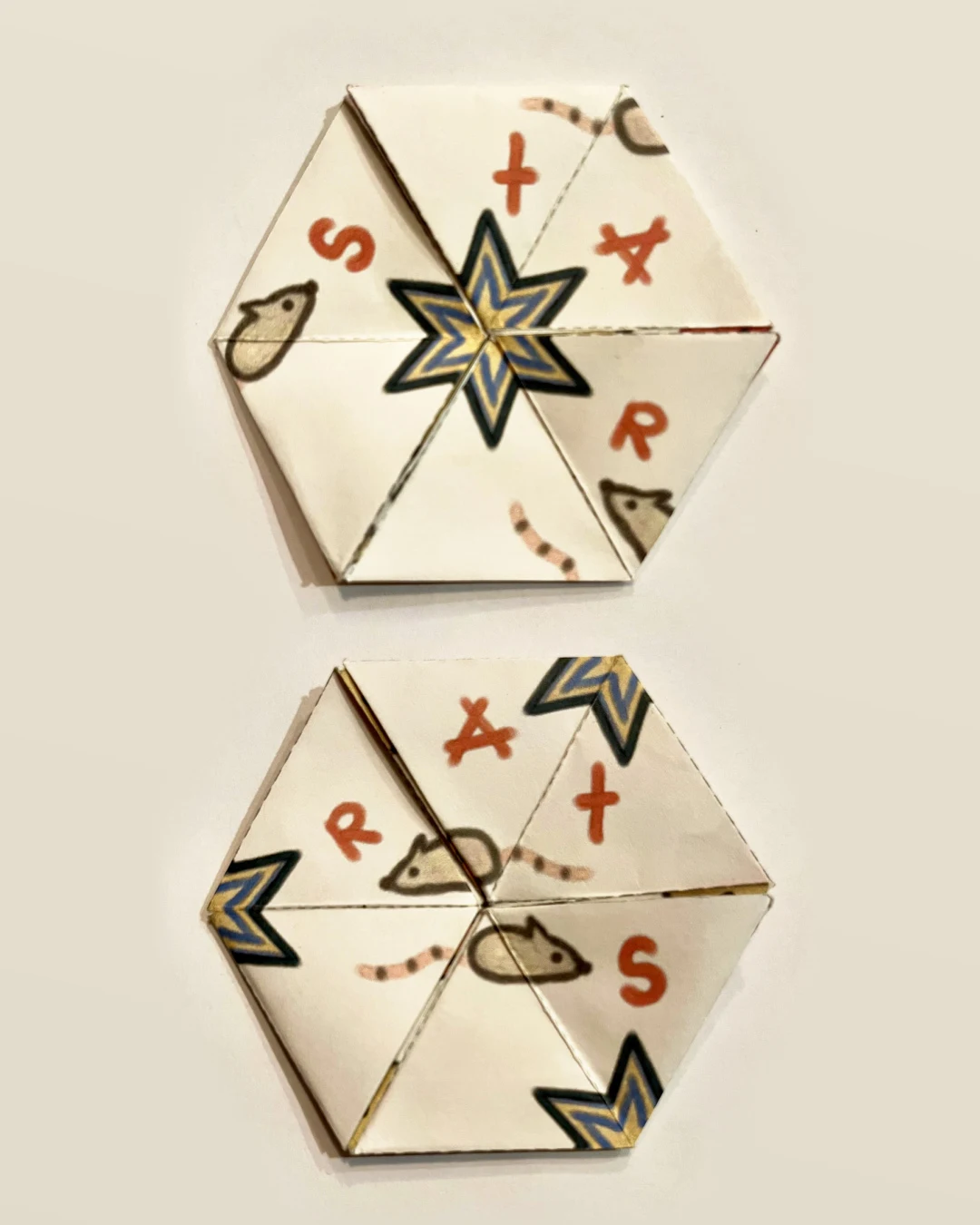
In this star and rats example, the letters t and a turn upside down. A little stylistic adjustment on an uppercase A does the trick.
A fun possibility would be the intentional use of letters that read differently when rotated, such as M and W, or d and p, or even N and Z. These wouldn't produce anagrams anymore, but another type of wordplay specific to the hexaflexagon.
A hexaflexagram?
Circling around
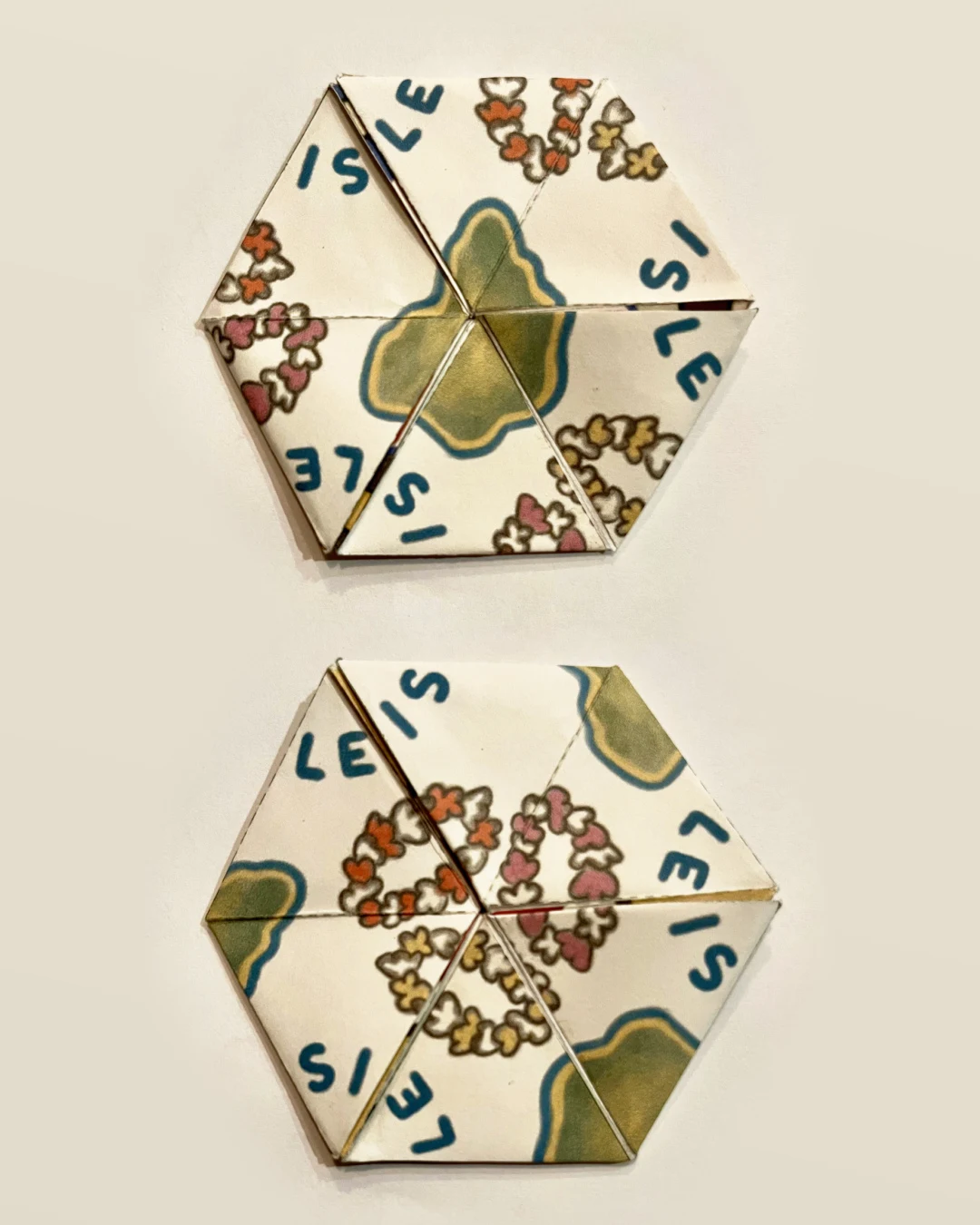
A cyclic shift also works perfectly on a hexaflexagon: split a word into two chunks and swap their order. One example of this is isle and leis.
An especially satisfying example appears in Serbian, and it plays with a familiar drink: koka kola becomes kako lako, meaning “how easy,” when each word is cyclically shifted.

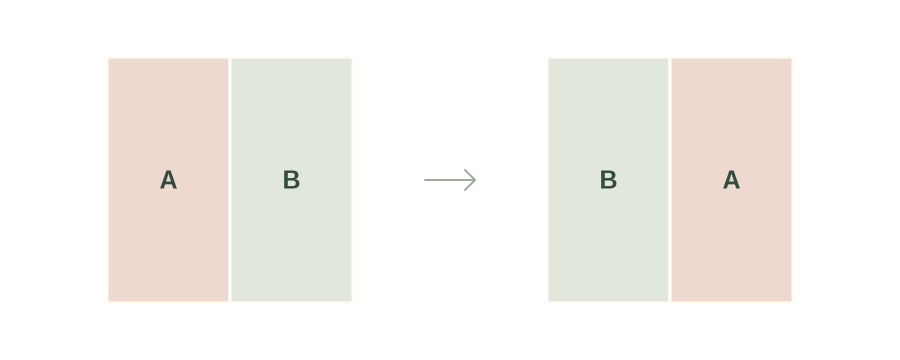
A tetraflexagon would also be a natural place to play with cyclic shifts, as flexing along a vertical crease literally swaps the left and right halves of a face.
The full design
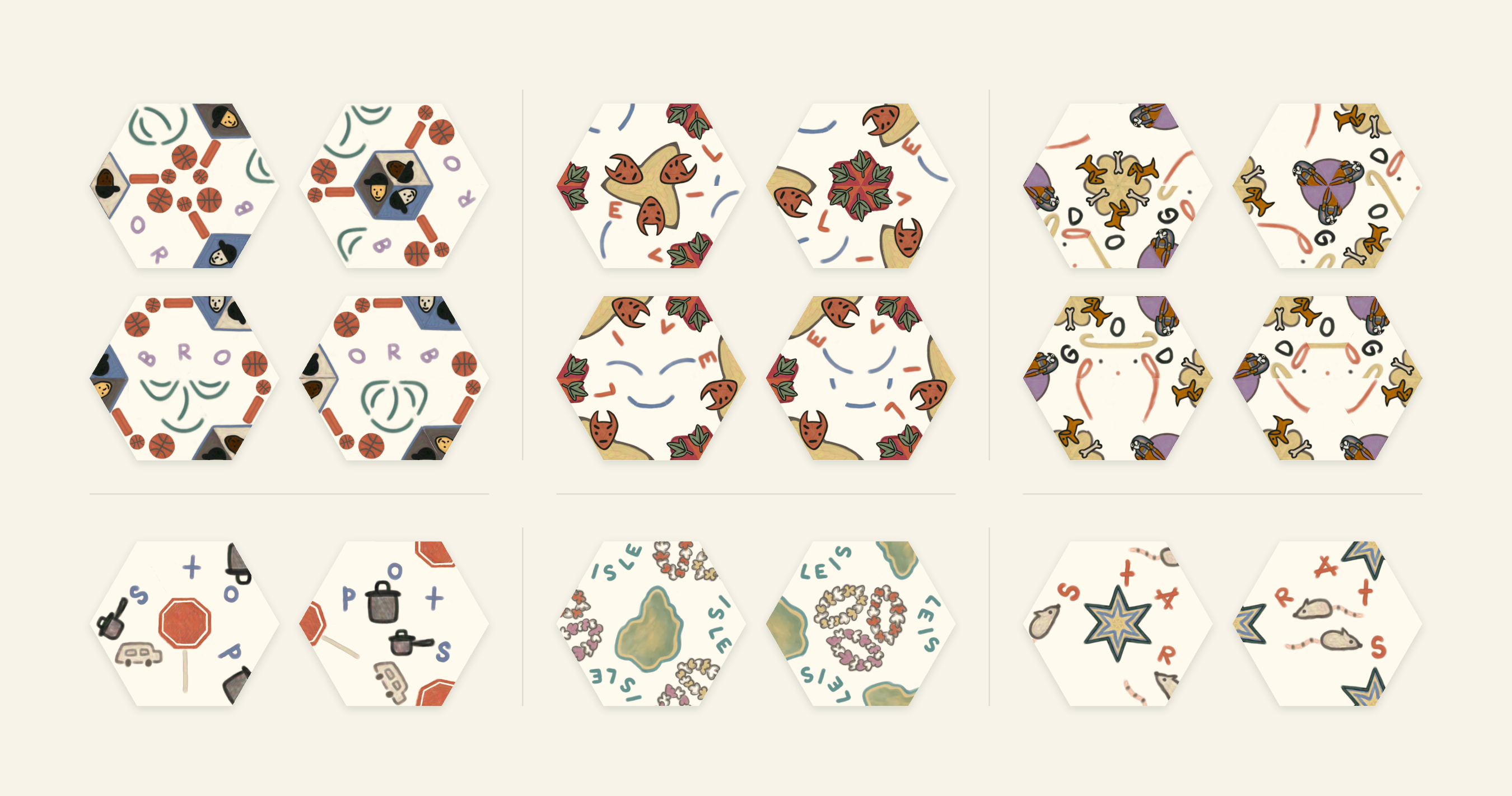
Here are all six faces and eighteen orientations.
Print and fold this anagrams hexaflexagon.