
How to make a hexahexaflexagon
Make a six-faced hexahexaflexagon from a printable design or a blank template.
A hexahexaflexagon starts with a longer strip than a trihexaflexagon and takes more steps to assemble. If this is your first hexaflexagon, try the trihexaflexagon guide first.
Choose a pattern
Pick a ready-made pattern, or the blank template. Each PDF includes the template and illustrated instructions.
What you’ll need
Printer, paper, scissors, glue, and clear tape.
Tip: use ordinary printer paper. A hexahexaflexagon has several folded layers, so thick paper can make it difficult to assemble.
Print and prepare the strips
Tap a diagram to enlarge it.
Fold and glue. Fold each printed strip lengthwise and glue the blank sides together, with the printed sides facing out.

Cut out both strips. Cut along the solid outlines through both layers.

Pre-crease. Fold each diagonal crease in both directions, then open the strips flat. A crisp crease at every triangle helps the finished model flex smoothly.

Fold the hexaflexagon
Follow the step-by-step diagrams below to fold the hexaflexagon.
1. Join the strips. Tape two edges together as shown to make one long strip.

2. Fold adjacent pairs together. Fold pairs of triangles face-to-face as shown, always wrapping in the same direction. You will end up with a shorter strip.

3. Fold B onto A. Position the shortened strip to match the diagram, flipping it over if needed. Then fold B onto A.
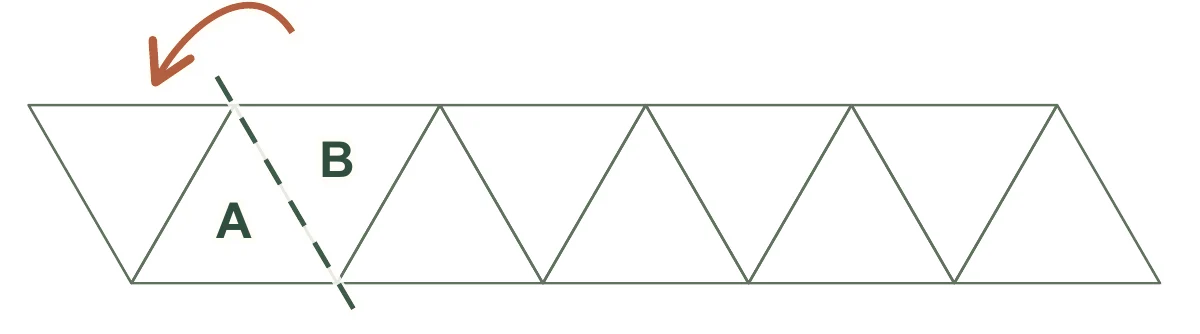
4. Fold D onto C.
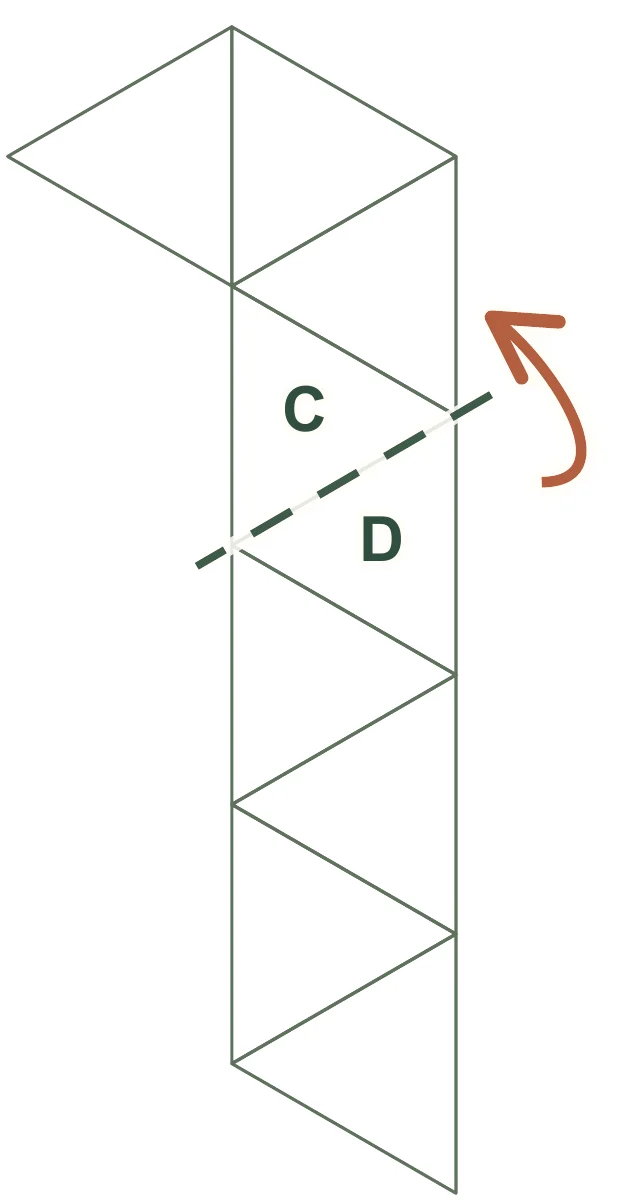
5. Fold F onto E. The strip should now form a hexagon with a loose flap.
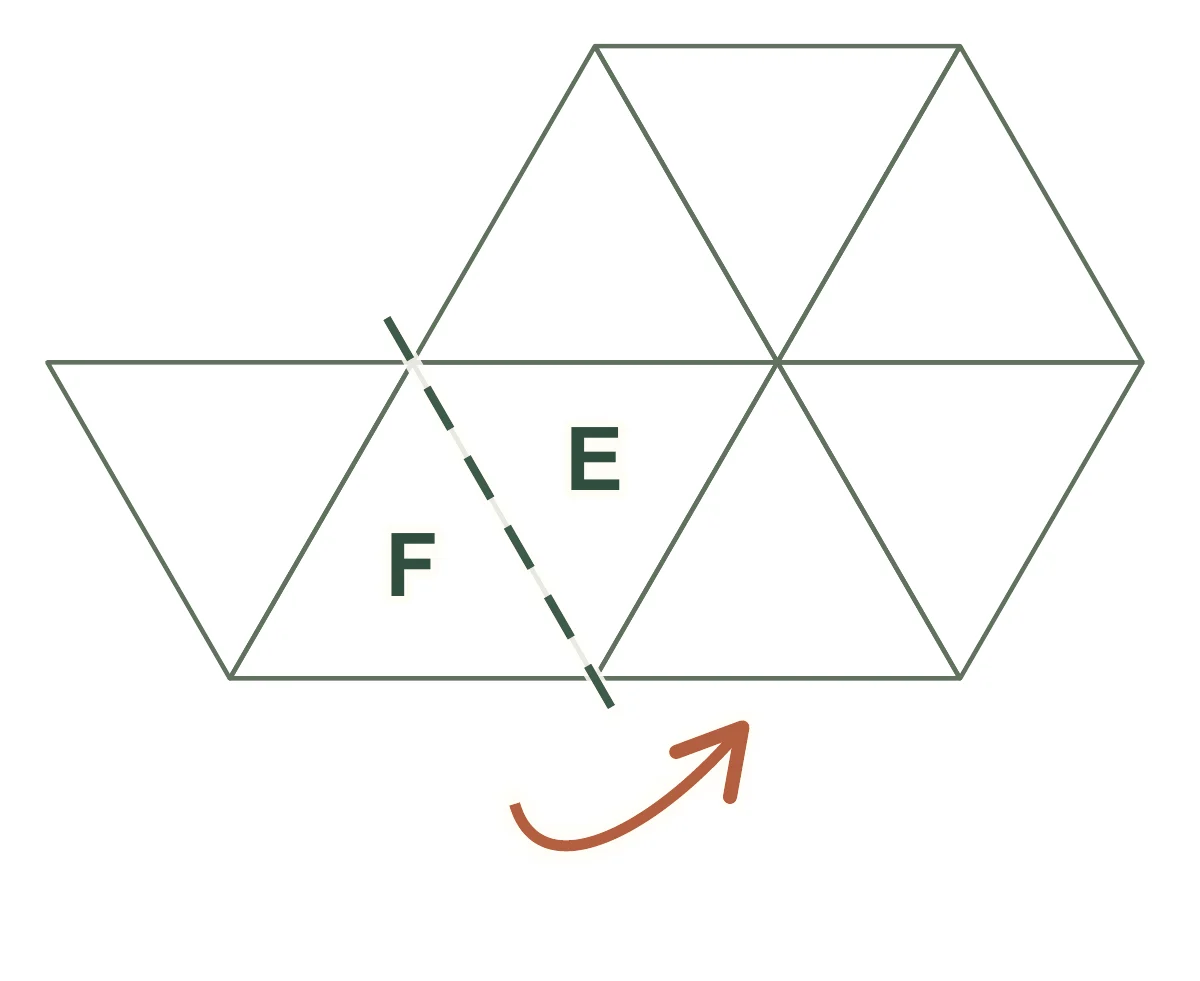
6. Tuck the loose triangle behind. Bring the loose triangle back and the triangle that was underneath it to the front.
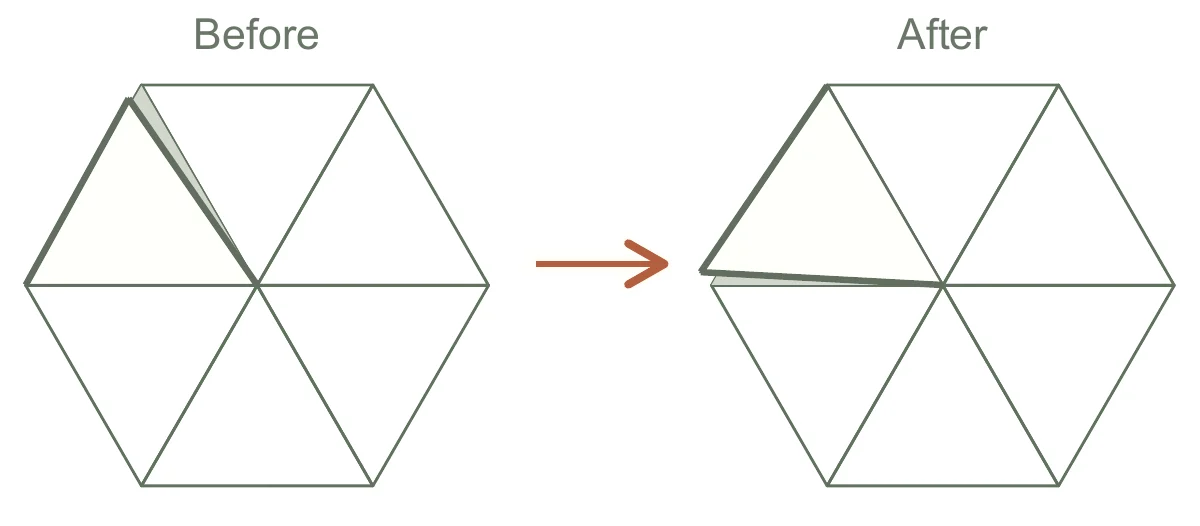
7. Tape the outer edge. Join the two triangles you just swapped by wrapping tape over their shared outer edge.
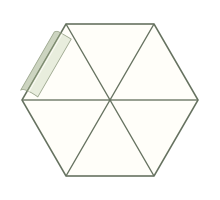
Flex your hexahexaflexagon
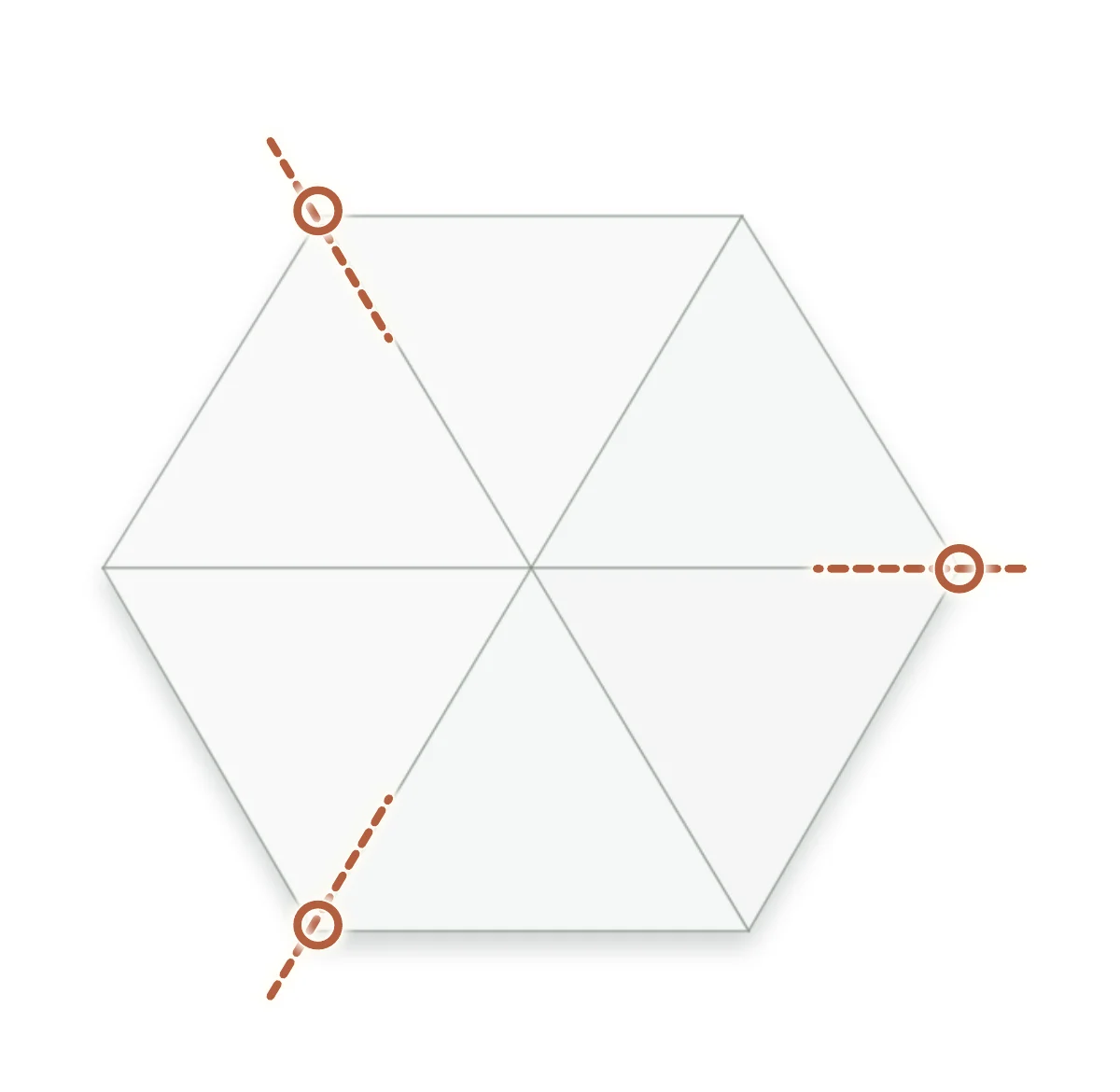
1. Pinch. Pinch three alternate corners. The other three corners should move away from you.
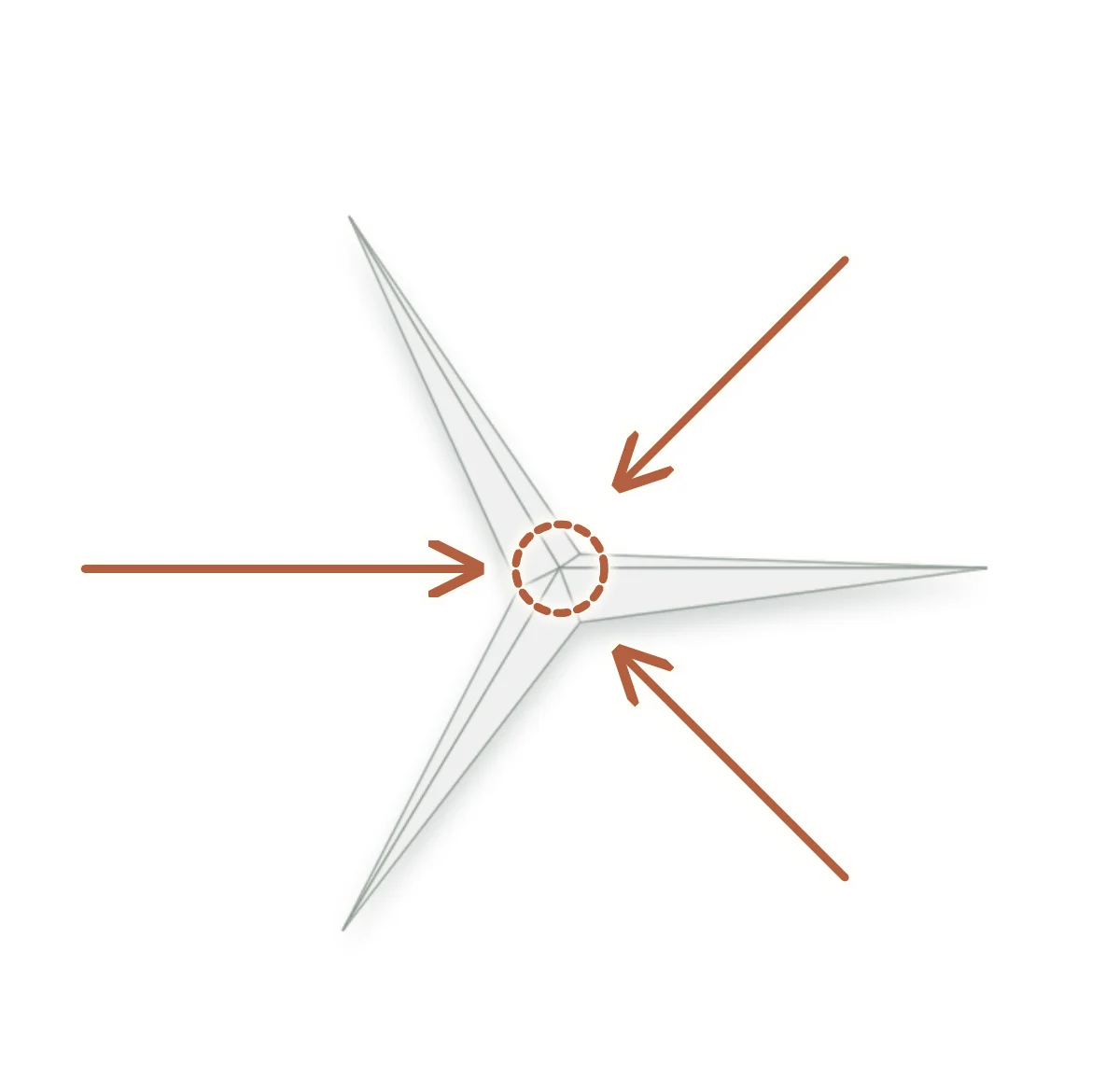
2. Push inward. Push those other corners toward the center.
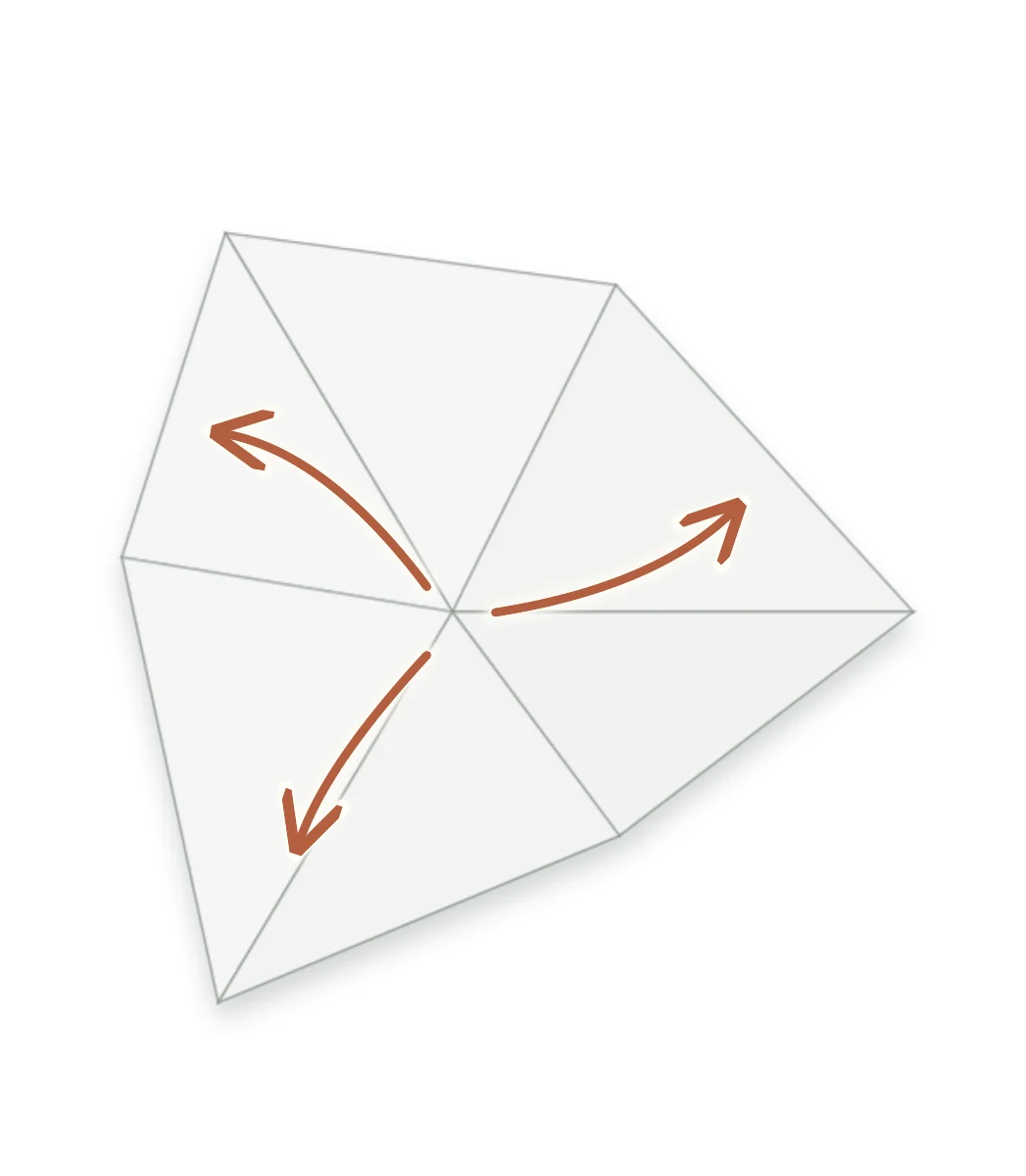
3. Open. Gently open the flexagon from the middle. If it will not open, close it and try the other set of three corners.
Keep exploring to find all six faces. Flip the hexagon over and try again. Some faces also flex from the other set of three alternating corners. Follow the creases that move freely, and avoid forcing the paper open.
Ready to try a different shape? Try making a tetraflexagon.