
What’s a flexagon?
A flexagon is a folded paper toy with hidden faces. It looks like a flat shape, but gently folding and reopening it reveals surfaces that were tucked inside.
A square shaped one is called a tetraflexagon and a hexagon shaped one is called a hexaflexagon.
More specifically, a three-faced hexaflexagon is a trihexaflexagon and a six-faced hexaflexagon is a hexahexaflexagon.
As the paper flexes, the design rearranges, so one pattern can become another. For example, a trihexaflexagon contains two different orientations of each face.
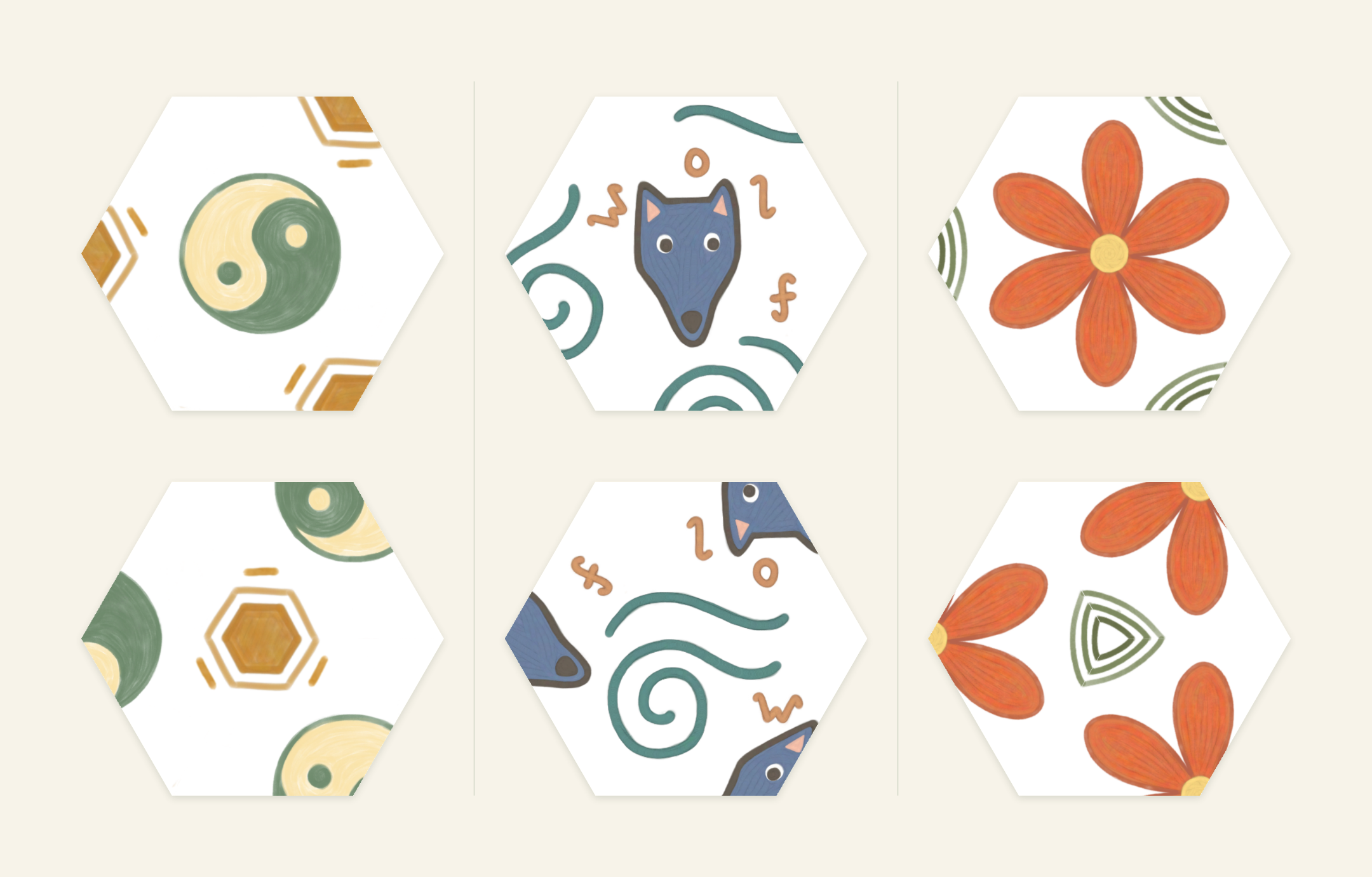
In a hexahexaflexagon, three of the faces have four orientations each, while the other three faces have two orientations each.
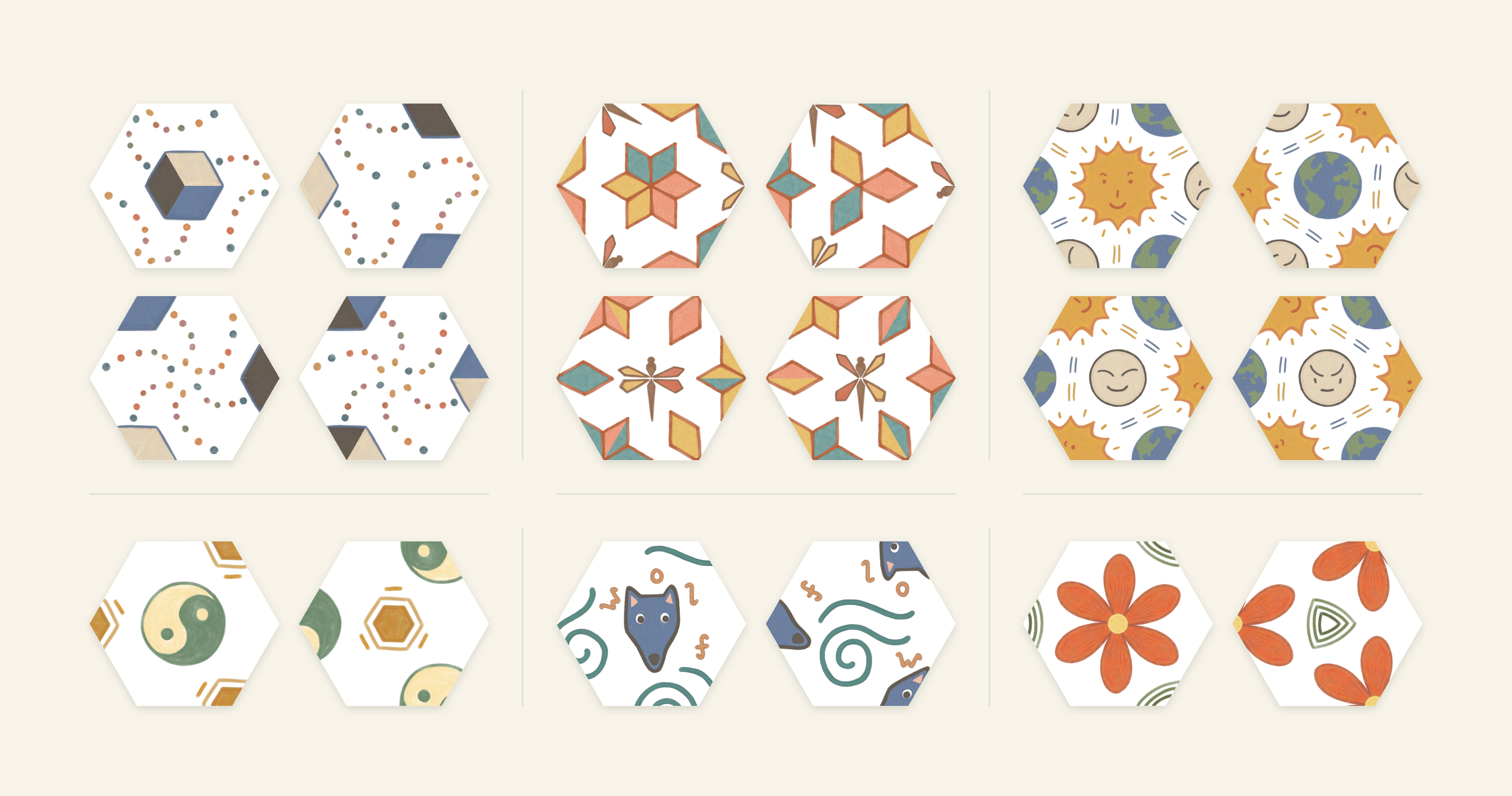
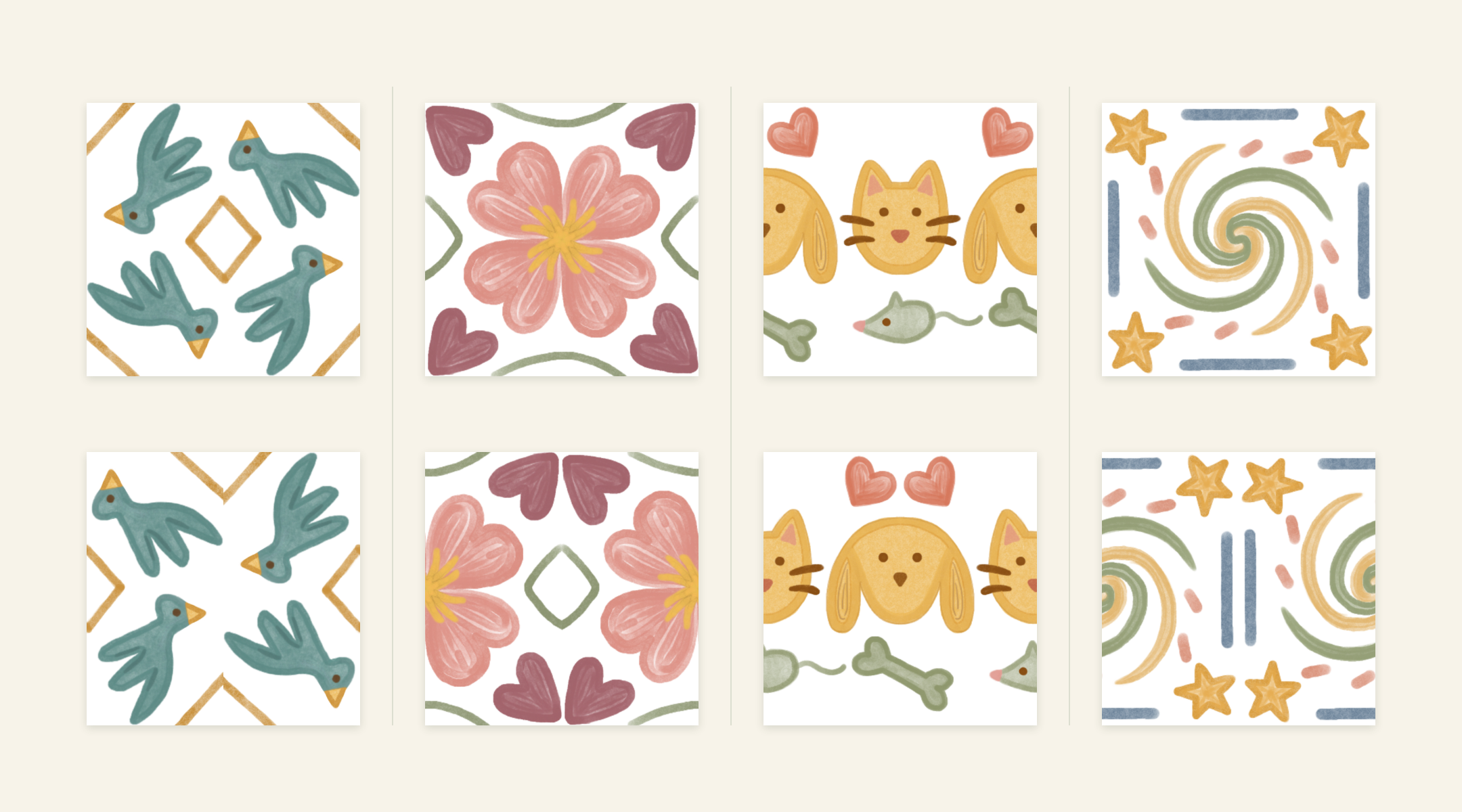
And finally, our tetraflexagon contains four faces (making it a tetratetraflexagon) with two orientations of each face.
Make one yourself
Start with a tetraflexagon or a three-faced trihexaflexagon. Each guide includes printable patterns and step-by-step folding instructions.
For a longer folding project, try a six-faced hexahexaflexagon.
There exist numerous other flexagon variations. You can explore many more possibilities at the Flexagon Portal or at Loki's collection.
To see hexaflexagons in action, watch Vi Hart’s playful Hexaflexagon Safety Guide.
Or, enjoy a classic introduction from Martin Gardner in his 1956 Scientific American column.